Chapter 09

The Style JournalArticles on men’s formal shirts and office fashion

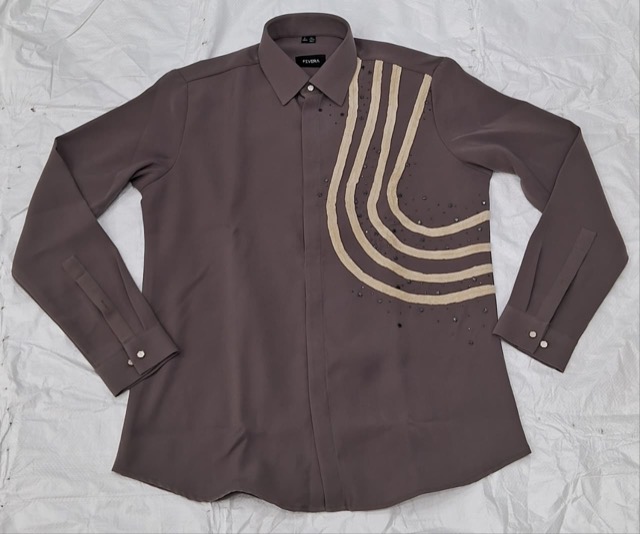
Taupe shirt with a curved rope appliqué across the chest
Pl. 01Cover: taupe, with a rope appliqué

01 — Trends

The formal shirt evolves slowly, but it does evolve. Here are the shifts shaping men’s formal shirts now, and the principles that remain constant underneath them.
Charcoal shirt with a black geometric appliqué
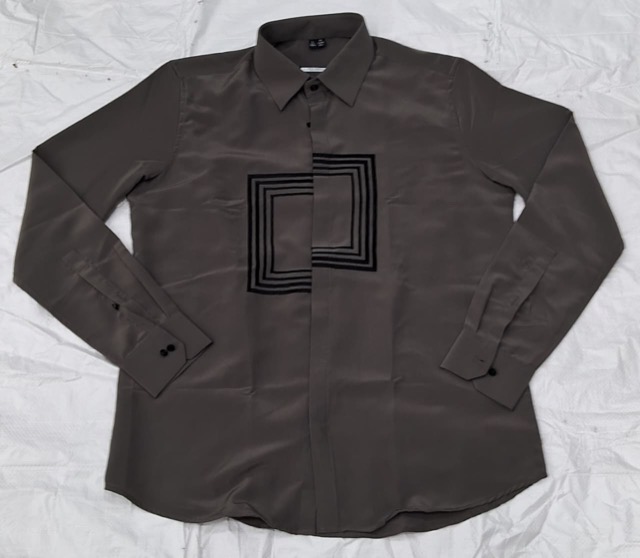
Pl. 02Charcoal with geometric appliqué

Softer structure. Collars are relaxing. Many contemporary formal shirts use lighter interlinings so the collar rolls naturally instead of standing stiffly, which suits the growing habit of wearing shirts without ties.

Deeper colour. Beyond white and blue, earthy and jewel tones are now accepted in many offices: olive, rust, aubergine, bottle green and dusty rose. Worn in solid fabrics, they feel modern while staying formal.

Surface interest. Texture is replacing loud pattern. Tonal stripes, dobby weaves and micro-prints let a shirt reward close inspection without shouting across the room.

Considered detail. Appliqué, piping and panels, such as the geometric detail shown here, have moved from festive wear into evening and creative-office dressing. Kept to one area of the shirt, they look deliberate rather than decorative.

Comfort as a standard. Fabrics that breathe, move and resist creasing are no longer a luxury; they are expected. In warm cities like Mumbai, this is perhaps the most welcome trend of all.

What stays the same. Fit, cleanliness and appropriateness. No trend will rescue a shirt that is too big, poorly pressed or wrong for the room. Follow trends at the edges of your wardrobe and keep the centre classic.
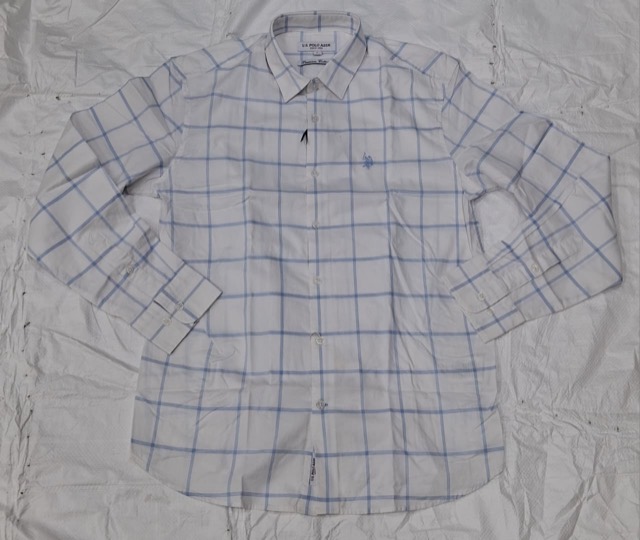
White shirt with a lilac windowpane check
Pl. 03White ground, lilac windowpane

02 — Essentials

The essential white shirt

“A white shirt forgives nothing, and that is why it flatters everyone who gets it right.”

Every man needs a white shirt, and most men need at least two. It is the only shirt correct at a wedding, a funeral, an interview and a board meeting. White formal shirts for men are also the most demanding: they reveal poor fit instantly, show every stain and turn grey if washed carelessly.

Choose a white shirt in a smooth weave such as poplin or broadcloth for formal occasions, and a textured weave such as oxford for everyday wear. A semi-spread collar is the most versatile shape. Avoid shirts so thin that the skin shows through; a little opacity looks more refined.

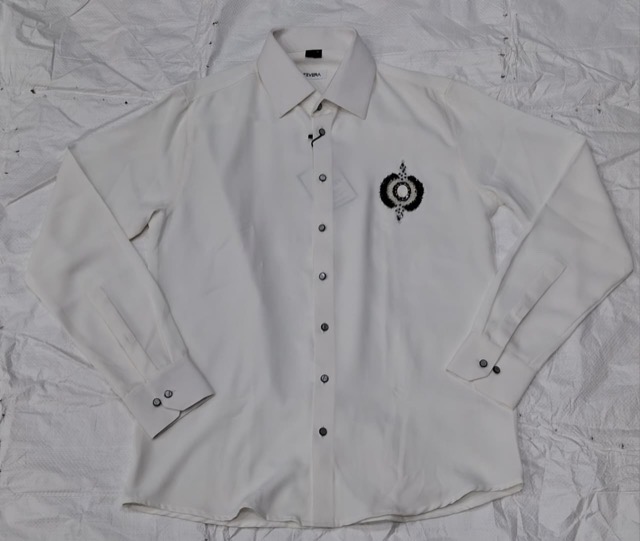
White has relatives, too. A white ground with a faint windowpane or a tiny embroidered emblem keeps the clarity of white while adding personality. These work beautifully in offices where pure white feels too severe.

White shirt with a small embroidered emblem
Pl. 04White with a small emblem

Care. Wash white shirts separately from colours, at the temperature the label allows, and iron them while slightly damp. Collars and cuffs need the most attention, as they mark first.

03 — Fit

Understanding shirt fits

The language of shirt fits is inconsistent: one maker’s slim is another’s tailored. Rather than relying on labels, understand what each fit is trying to do.

Slim fit
Close through chest and waist with narrow sleeves. Ideal for lean builds and close-cut suits. Watch for pulling at the buttons when seated.
Tailored fit
A middle path: a shaped waist with comfortable room in the chest and shoulders. Suits most body types and most occasions.
Regular fit
Straight and generous, designed for comfort and movement. Ideal for broad shoulders, larger builds and long days on the move.

Two shirts with the same collar size can fit very differently. Try on a shirt in the trousers you’ll wear it with, tuck it in, and move as you would at work. The right fit is the one you stop noticing within a minute.

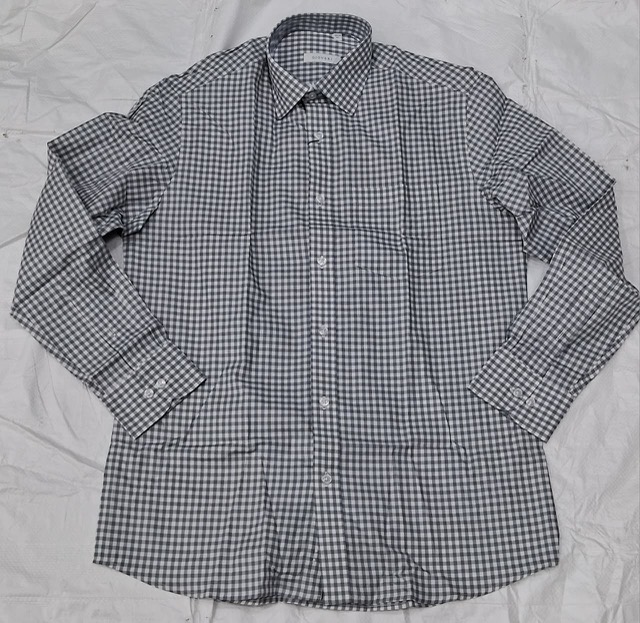
Pattern affects perceived fit. Small checks such as gingham are visually forgiving; strong vertical stripes accentuate any pulling or twisting. If a striped shirt looks wavy across the chest, the fit is too tight.

Black and white micro-gingham shirt
Pl. 05Micro-gingham: visually forgiving
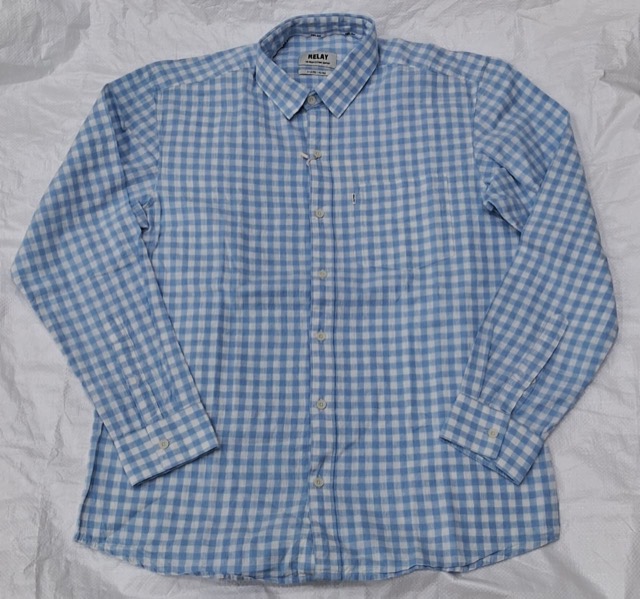
Light blue gingham shirt laid flat
Pl. 06Light blue gingham

04 — Office

Office dressing essentials

Seven things every working wardrobe needs, whatever the office.

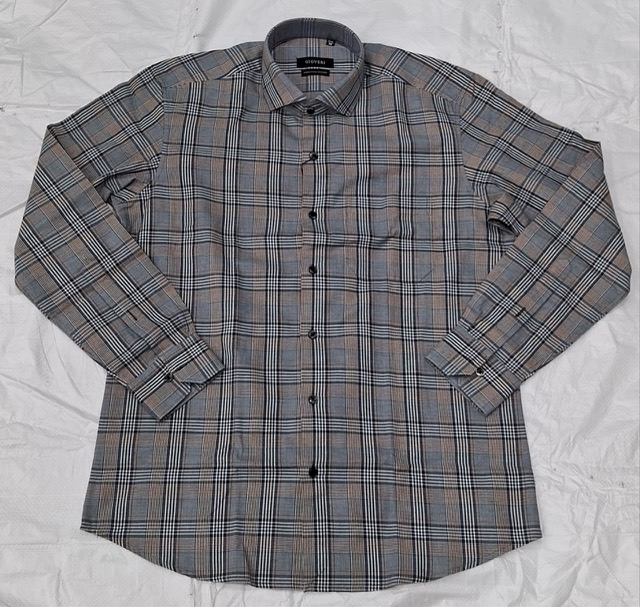
Grey checked office shirt laid flat
Pl. 07Grey check, an office staple
  1. Two white shirts

    One smooth for formal days, one textured for everyday. Replace them as soon as the collars start to tire.

  2. Three blue shirts

    A solid pale blue, a blue stripe and a blue check. Between them, they cover most of a working month.

  3. A grey or neutral check

    Subtle and adaptable, it works with every trouser colour and suits relaxed days and video calls alike.

  4. Charcoal and navy trousers

    The two most useful trouser colours in menswear. Keep them pressed and hemmed to touch the shoe lightly.

  5. A navy blazer

    The great translator, turning any shirt and trousers into business attire in seconds.

  6. Two pairs of leather shoes

    Black for formal days, brown for everything else, both regularly polished.

  7. A care routine

    Shirts on proper hangers, collars unbuttoned, a steamer or iron at hand. Care multiplies the life of everything above.

05 — Colour

Formal shirt colour combinations

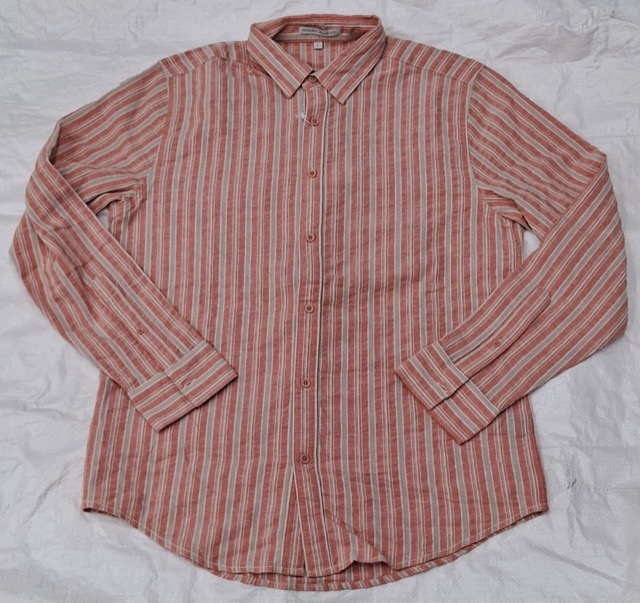
Coral striped shirt laid flat
Pl. 08Coral stripe: warm, friendly, daytime

Colour combinations succeed when they share a temperature or a contrast level. Cool shirts (blue, lilac, grey) sit naturally with cool suits (navy, charcoal). Warm shirts (coral, cream, rust) sit naturally with warm trousers (khaki, brown, olive).

Six dependable combinations
ShirtTrousersTie or accent
WhiteCharcoalBurgundy
Pale blueNavyNavy knit
PinkMid-greyNavy
Coral stripeKhakiBrown leather
LilacCharcoalDeep purple
OliveCreamTan suede

When in doubt, use the three-tone rule: no more than three main colours visible at once, with one clearly dominant. Accessories, such as belts, watch straps and shoes, should agree with one another rather than introducing a fourth colour.

06 — Meetings

How to dress for business meetings

Eight questions, answered plainly.

Should I always wear a tie?
No. Match the other party’s formality, then go one small step further. If unsure, wear a jacket and carry a tie in your bag.
What is the safest shirt colour?
Pale blue. It is formal, flattering on screen and in person, and less stark than white under bright lights.
Are patterns acceptable?
Yes, if they are small and quiet: fine stripes, micro-checks or a discreet dot. Avoid large or high-contrast patterns.
What about video meetings?
Avoid very fine stripes and tiny checks, which can flicker on camera. Solids and medium-scale patterns are safest.
Short sleeves?
Not for important meetings. A long-sleeve shirt with neatly rolled cuffs is more professional than a half-sleeve one.
How do I stay fresh in the heat?
Choose breathable fabrics, wear a light undershirt, and keep a spare shirt at the office for important afternoons.
Collar buttoned or open?
Buttoned with a tie, open by one button without. Never two buttons open in a business meeting.
What do people actually notice?
Fit, cleanliness and shoes, usually in that order. The brand of your shirt matters far less than its condition.
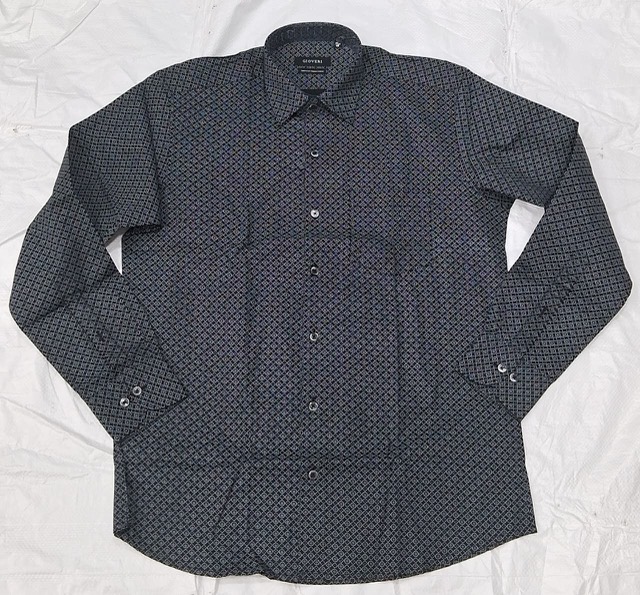
Navy shirt with a micro-dot pattern
Pl. 09Navy micro-dot: a quiet pattern

07 — Wardrobe

Building a professional wardrobe

The best wardrobes are built slowly and on purpose. Here is a twelve-month plan that avoids the expense of buying everything at once.

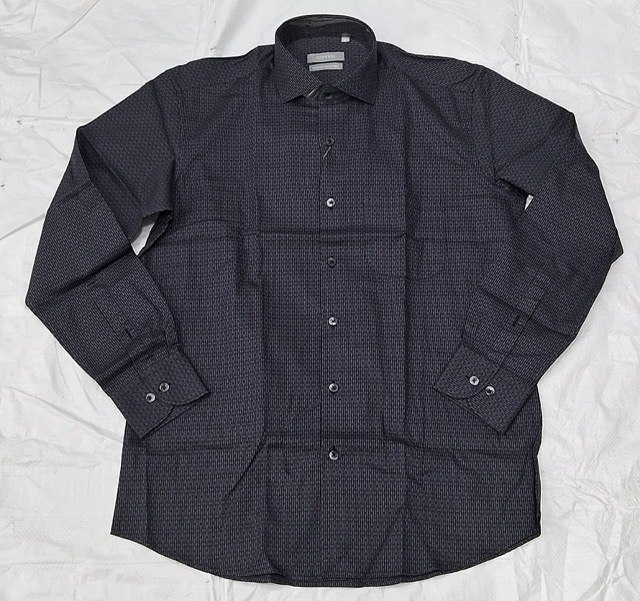
Navy shirt with a discreet micro print
Pl. 10Navy micro-print
  1. Month 1

    Two white and two pale blue shirts that fit well, plus charcoal and navy trousers. This is the core; spend the most care here.

  2. Month 3

    Add a blue stripe and a small check. Now you have enough variety for a full working week without repeating a combination.

  3. Month 6

    Introduce a navy blazer and one considered colour, perhaps pink, lilac or a dark solid, to expand into business casual.

  4. Month 9

    Add texture: an oxford or dobby shirt and a lighter-coloured trouser, such as khaki or stone, for relaxed days.

  5. Month 12

    Review. Retire what you never wear, replace what has worn out, and invest in one shirt that expresses your own style.

08 — Perspectives

Classic and contemporary formal fashion

Two schools of thought, in conversation.

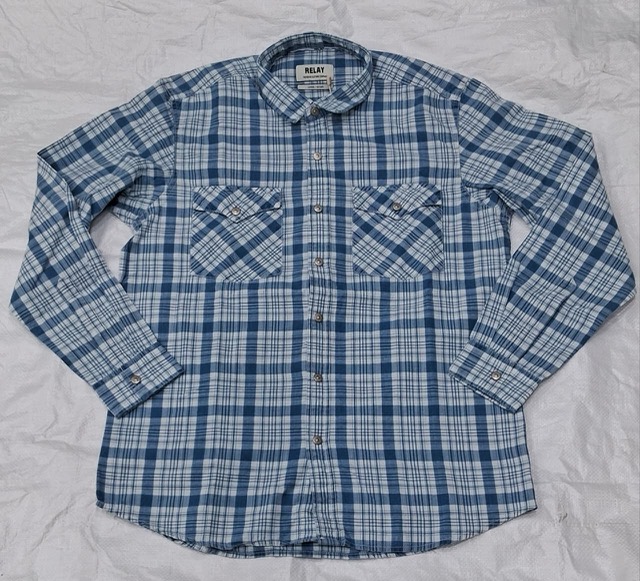
Blue checked shirt with two chest pockets
Pl. 11The classicist’s choice: a blue check

Classic A formal shirt should serve the suit and the occasion. Its job is to look correct.

Contemporary Correct is the starting point, not the destination. A shirt can be appropriate and still say something.

Classic Say something, yes, but quietly. A fine stripe, a good collar. The details are for those who look closely.

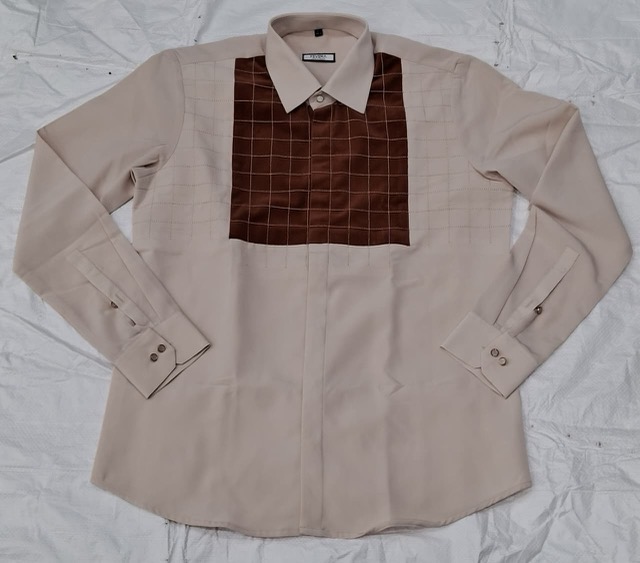
Contemporary Agreed on quietly. But a contrast panel or a deeper colour, worn well, is not loud. It is simply new.

Classic New fades. A pale blue shirt from twenty years ago still looks right today.

Contemporary And the best contemporary pieces become tomorrow’s classics. Every tradition was once an innovation.

The truth, as usual, sits in between. Build on classic foundations; let contemporary pieces bring the personality. A wardrobe needs both memory and curiosity.

Cream shirt with a burgundy checked bib panel
Pl. 12The modernist’s choice: a contrast bib